
For a full description of Soros go here, or go to SorosTrading.com.
Prince of the Pit
Who is George Soros? He is a successful Hungarian American Investor who is also well known for his philanthropist and political activities. George Soros nephew is often rumored to be Marc Mezvinsky (who is married to Chelsea Clinton); this is not true his nephews are Peter and Jeffrey Soros.
Soros has a net worth of $8 billion — having donated $18 billion to the Open Society Foundations (OSF); his philanthropically grant giving foundation.
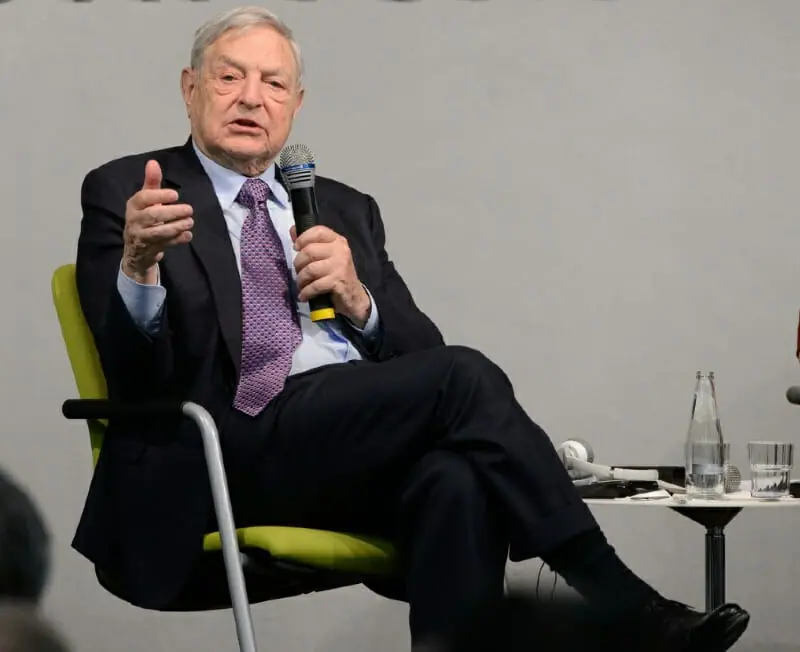
The Quantum Fund: A Trading Operation Like No Other
Soros founded the Quantum Fund in 1973 with Jim Rogers as his research partner. Over the following two decades it became one of the most profitable investment vehicles in history, producing returns that placed it second in the world among offshore funds — behind only Jim Simons’s Medallion Fund. The fund made its most famous trade in September 1992, when Stanley Druckenmiller identified the structural weakness in the British pound’s position within the European Exchange Rate Mechanism. Soros sized the position at $10 billion — far beyond what Druckenmiller had planned — and when the Bank of England was forced to devalue and withdraw from the ERM, the fund captured over $1 billion in a single day.
That trade is the most cited example of macro trend following at scale. The thesis was directional: the pound was overvalued within the ERM, the structural pressure was building, and the only question was timing. Soros and Druckenmiller followed the trend’s logic to its conclusion and sized the position to match their conviction. The result is the benchmark against which every macro trade since has been measured.
Here Are Some Excerpts from The Complete TurtleTrader on George Soros
Nineteen eighty-six was a huge year for Richard Dennis. He made $80 million (about $147 million in 2007 dollars). That kind of money- making put him squarely at the center of Wall Street alongside George Soros, who was making $100 million, and then junk bond king Michael Milken of Drexel Burnham Lambert, who was pulling in $80 million.
How they dealt with trading during times of rough seas:
Dennis had some severe down periods before that banner year of 1986. Perhaps his political ambitions had caused a loss of focus. Adding to his responsibility, by this time he had moved beyond trading only his own money. He was trading for others, and managing their money was not his strongest suit. He said, “It’s drastically more work to lose other people’s money. It’s tough. I go home and worry about it.”
This was not what his clients wanted to hear. In 1983, when his assets under management peaked at over $25 million, his accounts for clients hit turbulence. After a 53 percent rise in January, accounts dropped 33 percent in February and March. That drop was enough to prompt George Soros to yank the $2 million he had invested with Dennis only two months earlier. After a partial rebound in April and May, Dennis’s funds dived another 50 percent in value. His 1983-era computer that cost $150,000 did little to console nervous clients.
It took many of his investors more than two years to get back to even with their investment. Most didn’t stick around, and Dennis closed down some accounts in 1984. He rebated all management fees to losing accounts and conceded that trading client money as aggressively as his own money was not something clients could psychologically handle.
What the Dennis-Soros Episode Teaches
The detail about Soros pulling his $2 million from Dennis after two months of losses is one of the more instructive moments in The Complete TurtleTrader. Soros was not an unsophisticated investor. He ran one of the most successful macro funds in the world. And yet he exited a position in a proven trader after a two-month drawdown — a timeframe that any serious trend follower knows is far too short to evaluate a system.
This is the central psychological problem of managed money. A fund manager who follows a system with genuine edge will experience drawdowns. Those drawdowns are not evidence the system is broken. They are the price of participation in a strategy that produces returns over long periods. But clients who are not psychologically prepared for that volatility exit at the worst moment — after the drawdown and before the recovery. Dennis learned this the hard way in 1983. The TurtleTrader rules were designed in part to address it: a systematic framework makes the strategy’s behaviour legible to investors in advance, reducing the panic that comes from unexpected volatility.
Reflexivity: Soros’s Theory of Markets
Soros built his trading philosophy on a concept he called reflexivity — the idea that market participants’ beliefs about prices affect the prices themselves, creating feedback loops that drive prices away from equilibrium rather than toward it. In his framework, markets are not efficient processors of information. They are arenas where perception and reality influence each other in ways that produce persistent trends and eventual corrections.
This is a different vocabulary for the same observation that drives trend following. Prices trend because human behaviour is not random — participants respond to recent price history in patterned ways, reinforcing moves in both directions until the trend exhausts itself. Soros used that insight to build massive macro positions in currencies and bonds. Systematic trend followers use it to build diversified portfolios across dozens of markets. The mechanism is the same. The scale and structure of the expression differ.
Soros and the Trend Following World
Soros appears throughout the TurtleTrader universe as a point of reference rather than a practitioner of the method. He invested with Richard Dennis and pulled out early. He partnered with Jim Rogers to build the Quantum Fund. He employed Stanley Druckenmiller, who identified the pound trade and drove the execution. His career illuminates the trend following world from the outside — as its most celebrated adjacent practitioner, as a client who could not hold through a drawdown, and as the employer of the man whose trade defined macro trend following at scale.
Frequently Asked Questions About George Soros
Who is George Soros?
George Soros is a Hungarian-born American investor who founded the Quantum Fund in 1973. He is best known for the September 1992 trade in which his fund shorted the British pound and made over $1 billion when the currency was forced out of the European Exchange Rate Mechanism. He is also known for the Open Society Foundations, to which he has donated over $18 billion.
What is the Quantum Fund?
The Quantum Fund is the global macro hedge fund Soros founded with Jim Rogers in 1973. It produced returns that placed it among the top performing offshore funds in history over its first two decades. The fund’s most famous trade was the 1992 short of the British pound, which was conceived by Stanley Druckenmiller and sized by Soros.
Is George Soros a trend follower?
Soros is a macro discretionary trader, not a systematic trend follower. His approach is built on his theory of reflexivity, which holds that market prices are shaped by the self-reinforcing beliefs of participants. That framework leads him to identify large directional opportunities in currencies, bonds, and equities — which shares structure with trend following but executed through fundamental analysis and conviction rather than price signals and rules.
Why did Soros pull his money from Richard Dennis?
Soros invested $2 million with Dennis in early 1983 and withdrew it two months later after accounts dropped 33 percent in February and March following a 53 percent rise in January. The drawdown, though severe, was within the range of what a trend following system experiences during adverse periods. As The Complete TurtleTrader documents, even the most sophisticated investors struggle to hold through the volatility that trend following systems require.
Trend Following Systems
Want to learn more and start trading trend following systems? Start here.
