
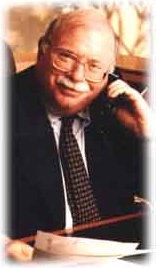
Market Wizards by Jack Schwager originally profiled Steinhardt. Here is an excerpt from their interview:
Q. How did you get started as a fund trader?
A. When I first got into this business in the late 1960s, I only had an analytical background. I was an agricultural equipment and cyclical goods analyst at Loeb Rhoades. My business was started with two other fellows who were also analysts. As our business grew, trading became more important. I became the trader from the firm, having had very little trading background.
The Analyst Who Became a Trader
That answer contains one of the more remarkable origin stories in the Market Wizards series. Steinhardt did not set out to be a trader. He was a securities analyst; an agricultural equipment and cyclical goods specialist who co-founded a firm with two colleagues from the same analytical background. Trading was an afterthought that grew in importance as the business scaled. He became the firm’s trader not by design but by necessity, and with what he describes as very little trading background.
What he had instead was something more durable: a deep analytical framework for evaluating businesses, sectors, and economic cycles, combined with the willingness to act on that framework when the evidence was compelling. That combination, analytical depth plus the courage to trade against consensus — became the defining characteristic of Steinhardt Partners and of Steinhardt’s reputation across three decades of markets.
28 Years, 24 Percent: The Track Record in Context
Steinhardt Partners ran from 1967 to 1995, producing average annual returns of around 24 percent net of fees across that period. To calibrate what that means: it is a 28-year record that spans the 1969-70 bear market, the 1973-74 crash, the 1987 crash, and the 1990 recession. A fund that survives and profits through that sequence of environments is not getting lucky in bull markets. It is operating with a genuine process that works across conditions.
The fund’s performance placed it among the handful of firms that defined what a hedge fund could be. George Soros and Jim Simons occupy similar territory at the extreme upper end of the performance distribution. What distinguishes Steinhardt is the breadth of his mandate; equities, bonds, currencies, global markets and the fact that he built that record using deep fundamental research rather than quantitative models, at a time when most institutional investors were still operating from much narrower frameworks.
Contrarian by Conviction
Steinhardt’s approach was built on a concept he called “variant perception”; the idea that profitable trades come from holding a view that differs from the market consensus, and being right. If your view is the same as everyone else’s, it is already priced in. The only trades worth making are the ones where your analysis leads you to a conclusion the market has not yet reached.
This is a different vocabulary for the same insight that drives systematic trend following. The TurtleTrader rules are built around the observation that markets misprice trends — that the consensus underestimates how far a price move will go and how long it will last. A trend follower captures the gap between what the consensus believes and where the price is going. Steinhardt captured a different kind of gap: between what the consensus believes about a stock’s value and what the fundamentals actually support. Both methods profit from the market being wrong. The mechanism for identifying and sizing the bet differs.
Going Short: The Other Half of the Equation
Steinhardt was one of the early practitioners of the true long-short hedge fund model, not just hedging as a risk management tool, but generating alpha from short positions as aggressively as from long ones. His short book was not a hedge. It was a profit centre. He would take large short positions in companies or sectors where his analysis identified overvaluation or structural deterioration, and he would hold those positions with the same conviction he brought to his longs.
This willingness to be aggressively short in a long-biased industry connects to the trend following world’s comfort with two-sided markets. The TurtleTrader system trades both long and short with equal weight — a downtrend is as tradeable as an uptrend, and the system has no bias toward either direction. Steinhardt arrived at the same two-sided view through fundamental analysis. The portfolio structure is analogous: genuine exposure to the full range of market conditions, not just the direction most investors prefer.
The Late 1960s as a Starting Point
Steinhardt entered the fund business in the late 1960s, precisely when the hedge fund industry was beginning to take shape as a distinct category. The original Jones model (long-short equity, leveraged, performance fee) was the template, and a small group of managers was developing the practices that would define institutional alternative investing for the next half century. Steinhardt was among the first cohort to prove that a disciplined, research-intensive approach to markets could produce returns that conventional long-only funds could not match.
That cohort, which also included Soros and a handful of others, developed their methods in parallel with the systematic trading world that Richard Dennis and William Eckhardt were building in Chicago. Different cities, different instruments, different methods. The shared conviction: that markets are not efficient, that disciplined analysis produces edge, and that the traders willing to act on that edge against consensus will outperform those who follow the crowd.
Frequently Asked Questions About Michael Steinhardt
Who is Michael Steinhardt?
Michael Steinhardt is a hedge fund manager who ran Steinhardt Partners from 1967 to 1995, producing average annual net returns of around 24 percent across 28 years. He was originally a securities analyst at Loeb Rhoades who co-founded his fund with two colleagues before becoming the firm’s trader. He was profiled in Market Wizards by Jack Schwager. After closing his fund, he became a prominent philanthropist.
What made Steinhardt’s trading approach distinctive?
Steinhardt built his approach around what he called “variant perception”, seeking situations where his analysis led to conclusions that differed from the market consensus. He ran a true long-short book, generating returns from short positions as aggressively as from longs. His fund operated across equities, bonds, currencies, and global markets at a time when most managers operated within much narrower mandates.
How does Steinhardt connect to trend following?
Both Steinhardt and systematic trend following are built on the premise that markets are frequently wrong about price. Steinhardt exploited that through deep fundamental research and contrarian positioning. Trend followers exploit it through price signals that identify where consensus is slow to catch up with reality. The method differs; the underlying conviction that disciplined analysis of market mispricings produces returns over time is shared.
Why did Steinhardt close his fund in 1995?
Steinhardt closed Steinhardt Partners in 1995 after a difficult 1994 in which the fund suffered significant losses in the global bond market selloff. After 28 years of operation and a record that placed him among the greatest hedge fund managers of his era, he returned capital to investors and retired from active money management. He later re-entered the industry but the original Steinhardt Partners fund was closed permanently.
Trend Following Systems
Want to learn more and start trading trend following systems? Start here.
