
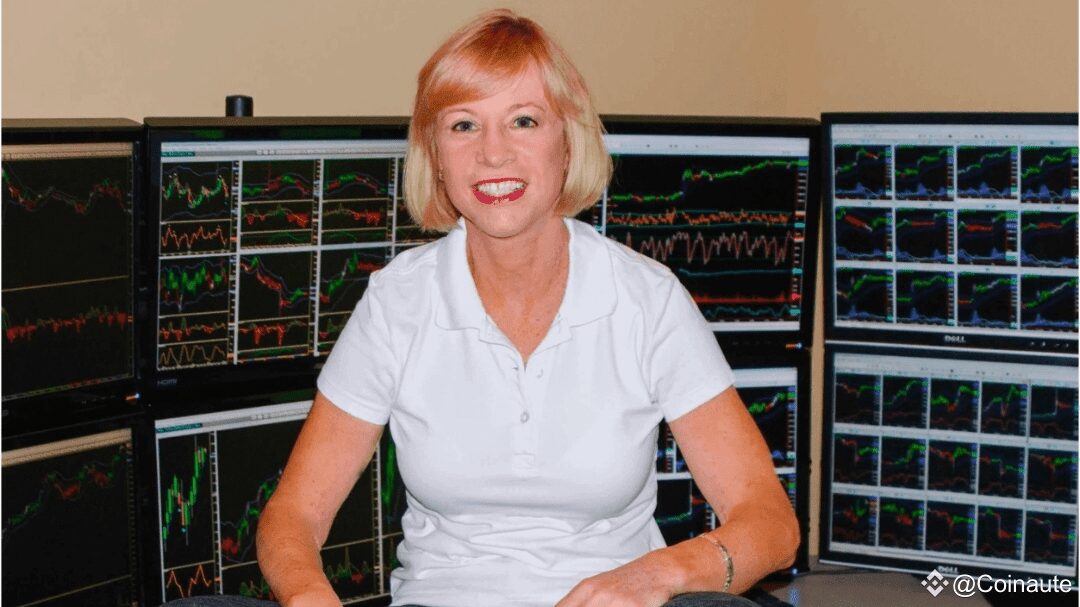
Linda Bradford Raschke did not sit in Richard Dennis’s classroom. She was never handed the Turtle rules, never traded Dennis’s money, and never appeared on the roster of the original experiment. The turtletrader.com note on her page is direct about this: Raschke was not a Turtle. And yet she belongs in any serious conversation about trend following, systematic trading, and what it means to build a durable career in the markets. Her presence here is earned not by proximity to the Turtle program but by something more interesting: she built a parallel body of work that intersects with, and in one famous case deliberately inverts, the ideas that made the Turtles famous.
Understanding why Raschke appears alongside Richard Dennis, Ed Seykota, and the rest of the trend following pantheon requires understanding what the turtletrader.com project is actually about. It is not a shrine to a single methodology. It is an examination of how markets work, how traders develop edge, and how a small number of practitioners have managed to stay profitable across decades and across market regimes. Raschke belongs in that examination on her own merits.
From the Floor to the Screen: How Raschke Started Trading
Raschke was born in 1959 in Pasadena, California, and studied economics and music composition at Occidental College, graduating in 1980. The combination is less surprising than it sounds. Both disciplines demand pattern recognition, comfort with structure, and the ability to execute under pressure. What she did with those skills after graduation was shaped less by a plan than by proximity and opportunity.
She found herself near the Pacific Coast Stock Exchange before she had any formal trading ambitions. A trader there explained how options pricing worked. Her reaction, as she later described it, was that you did not need to be a rocket scientist to do this. Some of the best traders she encountered on the floor were surf bums. Formal education had little apparent relationship with trading skill. When someone offered to back her, she was also considering an MBA. The choice was not difficult.
That story matters beyond its color. The decision to trade instead of pursuing a credential reflects the same orientation that made the best Turtles effective: a preference for doing over theorizing, for market feedback over classroom feedback, for skin in the game as the primary teacher. Raschke learned by making markets in equity options on the Pacific Coast Stock Exchange and later the Philadelphia Stock Exchange, accumulating the kind of pattern recognition that only comes from years of watching prices move in real time.
LBRGroup, the CTA Career, and a Hedge Fund Ranked 17th Out of 4,500
Raschke registered as a Commodity Trading Advisor with the National Futures Association in 1992 and founded LBRGroup, the vehicle through which she managed outside capital for the next two decades. The transition from floor trader to CTA is not automatic. The skills that make someone effective at reading the tape in a pit do not always translate to managing a systematic program for institutional clients. Raschke made the translation successfully.
She eventually launched the Granat Fund, trading global futures markets with an explicit focus on risk-adjusted returns and drawdown management. The fund’s performance record placed it 17th out of approximately 4,500 hedge funds for five-year performance as ranked by BarclayHedge. That ranking, achieved not in a single spectacular year but across a sustained period, is the kind of evidence that separates genuine skill from luck. She retired from institutional roles as a CTA and Commodity Pool Operator in 2015, having recorded only one losing year across her entire managed money career.
The longevity alone is the argument. Markets change. Strategies that worked in the 1990s often fail in the 2000s. The edge that carried a trader through one regime is frequently destroyed by the next one. Raschke’s consistency across multiple decades and multiple market environments suggests something more durable than a lucky strategy applied during a favorable period.
Street Smarts, Turtle Soup, and the Anti-Turtle Strategy
The work that connects Raschke most directly to the Turtle universe is her 1996 book, co-authored with Laurence Connors: Street Smarts: High Probability Short-Term Trading Strategies. The book contains dozens of short-term trading setups, but the one that generated the most attention in trend following circles is Turtle Soup.
The name is the key. The Turtle rules are built on breakout entries: buy a new 20-day or 55-day high, sell a new low, and let the trend carry the position. The logic is sound, but it has a structural vulnerability. Breakouts fail. Markets make new highs or lows, trigger trend following entries, and then reverse. These false breakouts are the tax that trend followers pay in exchange for capturing the genuine trends that define the strategy’s returns.
Raschke looked at this vulnerability and built a strategy designed to trade the other side of it. Turtle Soup enters short when a new 20-day low appears to be breaking down, on the premise that a significant percentage of those breakdowns are false and that the market will snap back. It is, in the most literal sense, a strategy that makes money when trend followers lose money, hunting the stops and failed entries that systematic breakout systems generate.
This is not a criticism of trend following. It is a recognition that markets are complex enough to support multiple edges simultaneously. The trend follower and the Turtle Soup trader can both be right, across different time horizons and different market conditions. What Raschke’s work demonstrates is that understanding the Turtle methodology deeply enough to build its inverse requires genuine mastery of the original. You cannot identify where a strategy is vulnerable without first understanding where it is strong.
The broader concept of mean reversion as a complement to trend following is developed further on the retracement page and in discussions of momentum as a market phenomenon. The relationship between the two approaches is not adversarial. It is structural: trends exist because of mean-reverting behavior in the short term that eventually gives way to persistent directional movement at longer horizons.
The Market Wizards Interview and What It Revealed
Jack Schwager profiled Raschke in The New Market Wizards in 1992, placing her alongside figures like Stanley Druckenmiller and Bill Lipschitz in the pantheon of traders who had demonstrated sustained excellence. The interview is notable for its candor about how she learned, how she thinks about risk, and how she maintains discipline across the inevitable losing periods that every trader faces.
Her observation that formal education had little to do with trading skill echoed what Dennis had found with the Turtles: the characteristics that matter most, discipline, willingness to follow a system, tolerance for uncertainty, are not reliably produced by academic training. They are either present or they are not, and the market is ultimately the only qualifying exam that matters.
Schwager’s Market Wizards project as a whole provides important context for the turtletrader.com story. The Turtles were a systematic experiment in trader development. The Market Wizards interviews were a qualitative survey of what excellence looked like across a range of styles and approaches. The overlap between the two bodies of work is significant: several of the traders profiled by Schwager, including Seykota and Michael Marcus, are also central figures in the Turtle narrative. Raschke belongs in that intersection.
Trading Sardines and the Long View
In 2019, Raschke published Trading Sardines: Lessons in the Markets from a Lifelong Trader, a memoir that blends personal history with market philosophy. The title is a reference to the old saying about sardines traded for speculation versus sardines traded for eating: the speculative sardines change hands many times, but opening the can reveals that the underlying commodity has long since spoiled. It is a parable about the difference between trading as a game and trading as a claim on real-world value.
The book reflects a sensibility that runs through her entire career: humility about what can be known, respect for what the price action is actually saying, and a deep skepticism of overconfident systems and narratives. Those qualities are exactly what William Eckhardt was trying to identify when he and Dennis designed the Turtle selection process, and they are what separates the traders who last from the ones who blow up.
In 2024, the International Federation of Technical Analysts recognized Raschke with a Lifetime Achievement Award for her contributions to technical analysis and trader education. She had by then taught professionals and bank traders across more than 22 countries, a scope of influence that rivals the Turtle program’s own legacy in terms of practical reach.
What Raschke Adds to the Trend Following Conversation
The turtletrader.com site exists to explore the ideas behind systematic, rules-based trading and to profile the practitioners who have advanced those ideas. Raschke’s value in that context is triangulation. Her career provides an independent data point about what works, developed without access to the Turtle rules, without Dennis’s backing, and from a starting point in floor trading rather than systematic futures.
The convergences are instructive. Raschke arrived independently at many of the same conclusions: price is the primary signal, discipline matters more than intelligence, risk management is the foundation rather than the afterthought, and consistency across time is more valuable than spectacular performance in any single period. The differences are equally informative. Her shorter time horizon, her comfort with discretionary overlays on systematic frameworks, and her explicit development of strategies that exploit trend following’s structural weaknesses all push against the pure systematic orthodoxy in ways that sharpen thinking about where the edge actually lives.
The Turtles were taught that trend following could be learned and systematized. Raschke demonstrated that excellent trading could be built on a different foundation and still produce results that stand comparison with the best systematic managers of her generation. That is not a contradiction of the Turtle thesis. It is evidence that the underlying market inefficiencies the Turtles were taught to exploit are real enough to be approached from multiple angles.
Original Content from TurtleTrader
Since I didn’t have to be at work until 8:30 and the exchange opened at 7:30, I started spending the first hour of my day at the exchange. One trader explained the pricing of options to me and I thought, Gee, I can do that. You don’t have to be a rocket scientist to be a trader. In fact, some of the best traders whom I knew down on the floor were surf bums. Formal education didn’t really seem to have much to do with a person’s skill as a trader. The person who had explained the basics of the options market to me thought that I’d make a good trader and offered to back me. At the time, I was applying to graduate schools to get an M.B.A. I thought to myself, I can either go to business school to get my M.B.A., or I can trade on the floor of the stock exchange — hmm, which do I want to do? It wasn’t a hard decision.
Please note: Raschke was not a Turtle.
Frequently Asked Questions
Was Linda Raschke a Turtle trader?
No. Raschke was not part of Richard Dennis’s Turtle trading program. She developed her career independently, starting as a floor trader in options on the Pacific Coast Stock Exchange in 1981. Her connection to the Turtle story comes through her development of the Turtle Soup strategy and her parallel career as one of the most successful systematic traders of her generation.
What is the Turtle Soup strategy?
Turtle Soup is a short-term mean-reversion strategy developed by Raschke and Laurence Connors, published in their 1996 book Street Smarts. It takes the opposite side of Turtle-style breakout entries, entering positions when apparent breakouts appear likely to fail and the market is likely to reverse. It exploits the structural vulnerability of trend following systems to false breakouts.
What is Linda Raschke’s track record?
Raschke managed institutional money as a registered CTA and Commodity Pool Operator from 1992 until her retirement from those roles in 2015. Her Granat Fund was ranked 17th out of approximately 4,500 hedge funds for five-year performance by BarclayHedge. She recorded only one losing year across her entire managed money career.
What books did Linda Raschke write?
Raschke co-authored Street Smarts: High Probability Short-Term Trading Strategies with Laurence Connors in 1996, which remains one of the most cited books on short-term trading setups. In 2019 she published Trading Sardines: Lessons in the Markets from a Lifelong Trader, a memoir combining personal history with market philosophy.
Why does Linda Raschke appear on a Turtle trading site?
Her inclusion reflects the site’s broader mission: to examine systematic, disciplined trading and the practitioners who have sustained it across decades. Raschke’s career provides an independent benchmark against which to measure the Turtle legacy. Her convergence with many Turtle principles, and her deliberate departure from others, makes her one of the most useful counterpoints in any serious study of what actually works in the markets.
Trend Following Systems
Want to learn more and start trading trend following systems? Start here.
