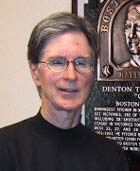
Excerpts from The New Investment Superstars by Lois Peltz:
Born in Quincy, Illinois, in 1949, Henry spent most of his childhood in Forrest City, Arkansas, where his father owned some farms. When John was 25, his father died and he took over his family’s farm and taught himself hedging techniques. He began speculating in corn, wheat, and soybeans. He eventually became a commodity trading adviser. Henry says he has an ability to read between the lines. Discerning which sets of information have relevance to the future is very difficult and requires an ability to see beyond the pure numbers. He gives the example of raw diamonds going up in price for 25 consecutive years from 1955 to 1980. In New York City, everyone believed diamond prices could not go down. Diamond traders stopped doing business to some extent because they were making so much money just on their inventory appreciation. Similarly at this time, he says, he owned farmland in the Midwest. Everyone believed prices of farmland could never go down, and many of the farmers he knew believed they had to purchase land at prices and interest rates that made it impossible to make money. In 1980, I researched the history of markets and saw these as classic signs from the heartland of America to the streets of Manhattan that in certain hard-money sectors, individuals believed the world had fundamentally changed to a new landscape. That’s how humans react to long-term divergences. They begin to believe that what is happening now will go on forever. The fact is new landscapes emerge and they last longer than anyone can foresee, wiping out convergence traders. But they do not last forever. Another landscape emerges. That’s why I’m a Trend Follower. Twenty years later diamonds are still roughly 80% cheaper than they were at that time. Farmland in the Midwest still does not sell for what it did when I sold my land in 1980. Henry believes that no one can predict the future, and the world is very uncertain. Therefore, one must have a certain aptitude for determining which, if any, data has significance for investing. The current thinking is that stocks have outperformed everything else for 200 years. They may have a little relevance for the next 25 years. But there is no one in the year 2000 that you can convince to jettison the belief that 200 years of performance will not cause stocks to grow to the sky. Right now people believe in data that supports the inevitable growth in prices of stocks within a new landscape or new economy. What will be new to them is an inevitable bear market.
- Barings #1
- Barings #2
- More Biography on Henry
What Henry’s Diamond and Farmland Story Reveals
The diamond and farmland examples are not anecdotes. They are Henry’s direct personal experience of the mechanism that makes him a trend follower. He observed, from inside the affected markets, the psychology of a speculative mania in its final stages: complete consensus that prices could only go one direction, participants stopping normal business activity because inventory appreciation made it unnecessary, and no one entertaining the possibility that the trend would end.
Henry’s 1980 observation is the exact description of what behavioral finance would later document as the recency bias and the narrative fallacy. Long-term divergences from fundamental value persist because participants observe the trend, update their beliefs about fundamental value to match the observed prices, and conclude that “this time is different” and “a new landscape has emerged.” The longer the trend persists, the more convinced the consensus becomes. The diamond trend lasted 25 years. The Midwest farmland trend lasted through the 1970s. The technology stock trend of the 1990s, which Henry explicitly references in the final paragraph, lasted through the dot-com era.
Henry sold his farmland in 1980. The sale confirmed his willingness to exit a trend when his analysis indicated the landscape was about to change. The fact that farmland “still does not sell for what it did when I sold my land in 1980,” written at the time of the interview twenty years later, demonstrates both the accuracy of his analysis and the duration of the aftermath. New landscapes do not just end. They often reverse dramatically and the reversal lasts as long as the original trend.
The stock market observation in the final paragraph, written in 2000 at the peak of the technology bubble, was a precise forecast of what followed. Henry predicted that the belief in 200 years of stock outperformance producing inevitable future growth would collide with an inevitable bear market. The NASDAQ fell 78% from its March 2000 peak. The S&P 500 fell 49%. Henry was positioned correctly, not because he predicted the exact date of the peak but because he recognized the psychological signature of a consensus that had detached from fundamental value.
Frequently Asked Questions
How did John W. Henry start his trading career?
Henry grew up on farms in Arkansas, took over the family farm at age 25 after his father’s death, and taught himself hedging techniques while speculating in corn, wheat, and soybeans. His direct experience of the 1970s farmland and hard-money asset bubbles, and his ability to recognize the psychological signature of markets that had diverged from fundamental value, shaped his development of a systematic trend following approach. He became a commodity trading adviser and eventually built JWH into one of the largest and most successful systematic trading operations in the world.
What is Henry’s “new landscape” concept?
Henry uses new landscape to describe periods when asset prices diverge so far from historical norms that the consensus concludes the fundamental relationship has permanently changed. Diamonds rising for 25 consecutive years. Farmland prices that made conventional farming economically impossible. Technology stocks trading at hundreds of times earnings. In each case, the consensus concluded that a new economic reality had emerged that justified the prices. In each case, the landscape eventually ended and prices reverted. Henry’s insight is that these new landscapes always end, but they last longer than anyone can foresee, which is why they wipe out convergence traders who bet on mean reversion too early.
Why does Henry say he is a trend follower rather than a contrarian?
Because the new landscapes last longer than anyone can predict, wiping out those who bet against them. A contrarian who recognized that diamonds or farmland or technology stocks were overvalued and positioned against the trend in 1975, 1978, or 1998 would have been correct about the eventual outcome but destroyed by the timing. Trend following captures the full duration of the new landscape by following price rather than predicting the reversal, and then captures the reversal when it occurs by exiting and reversing position when the price signals confirm it.
TurtleTrader is Michael Covel’s site. So is TrendFollowing.com.
That’s where you’ll find his trading systems, courses, 1,400+ podcast episodes and much more.