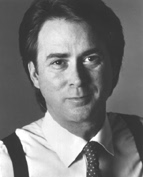
Charles Faulkner was originally profiled in Jack Schwager’s New Market Wizards. He is an expert in the field of NLP or Neuro-Linguistic Programming. Charles has worked closely for years with top traders worldwide.
NLP Background
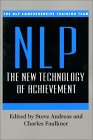
Charles has pioneered methods for accelerated language learning, as well as medical and financial decision-making. He is particularly well-known for his work with futures traders and his research on the role of metaphor in communication and behavior. Charles is the author of Metaphors of Identity, chief architect and co-author of NLP: The New Technology of Achievement, and Success Mastery with NLP:
Charles Faulkner appeared in Michael Covel’s film Broke: The New American Dream. He has also been a guest numerous times on Trend Following Radio with Michael Covel.
Why NLP Matters to Traders
Neuro-Linguistic Programming is the study of how people structure their internal experience and how that structure shapes behavior. In a trading context it addresses a specific and well-documented problem: traders who understand a system intellectually fail to follow it in practice. The gap between knowing what to do and doing it is psychological. Faulkner’s work is built around closing that gap.
The TurtleTrader rules are a clear illustration of why this matters. Richard Dennis and William Eckhardt developed a systematic trend following approach and taught it to twenty-three trainees in two weeks. The rules were not complex. The challenge was following them through drawdowns, through losing streaks, through market conditions that made the system feel wrong. The Turtles who succeeded were those who could hold their positions when the rules said hold and cut them when the rules said cut, without letting fear or hope override the signal. That capacity is what Faulkner’s NLP work develops in traders.
Metaphor and Mental Models in Trading
Faulkner’s research on the role of metaphor in communication and behavior has a direct application to how traders think about markets. Every trader carries a set of mental models about what markets are and how they work. Those models are encoded in metaphors: markets are battles, markets are games, markets are ecosystems. The metaphor a trader uses shapes what he notices, what he fears, and what actions feel natural.
A trader who thinks of markets as battles tends toward aggression and binary thinking. He wants to win each trade and feels each loss as a personal defeat. A trader who thinks of markets as probability machines tends toward patience and accepts losses as statistical noise. The second mental model is far more compatible with systematic trend following. Faulkner’s work helps traders identify which mental models are driving their behavior and replace the ones that undermine performance with ones that support it.
The New Market Wizards Profile and Faulkner’s Broader Influence
Faulkner’s inclusion in The New Market Wizards is notable because he is not a trader himself. Jack Schwager included him because his understanding of how exceptional traders think provides a different kind of insight than the traders’ own accounts. Where the traders in the book describe what they do, Faulkner describes why it works at the level of cognition and mental structure.
His observation about the TurtleTrader experiment is worth restating. When he learned that Dennis had taught his students a complete trading system in two weeks and sent them to trade, he found it almost impossible to accept. His own assumptions about learning said that anything worth that much should take much longer and much more effort to acquire. The experiment violated everything he believed about the relationship between effort, learning time, and reward. The fact that the results proved his assumptions wrong became a central piece of evidence in his own work on how performance skills are acquired.
Accelerated Learning and the Trading Mindset
Faulkner’s work on accelerated language learning has a direct parallel in trading education. Languages, like trading systems, involve a large number of rules and patterns that must be internalized to the point of automatic response. A language student who has to think through grammar rules when speaking is not yet fluent. A trader who has to recall risk management rules by thought in the middle of a volatile session is not yet competent. The goal in both cases is to move the rules from conscious application to habitual behavior so that the practitioner can focus on the higher-level decisions that the situation demands.
This is the practical contribution of NLP to trading: it provides tools for accelerating the internalization of the mental habits that systematic trading requires. Not just knowing the rules, but trusting them. Not just understanding that losses are part of the process, but experiencing that understanding in a way that stops the emotional override before it starts.
Frequently Asked Questions About Charles Faulkner
Who is Charles Faulkner?
Charles Faulkner is an NLP expert and trading coach who was profiled in The New Market Wizards by Jack Schwager. He has worked with top futures traders worldwide and is the author of Metaphors of Identity and co-author of NLP: The New Technology of Achievement. He appeared in Michael Covel’s documentary Broke: The New American Dream and has been a recurring guest on Trend Following Radio.
What is NLP and why does it apply to trading?
NLP is Neuro-Linguistic Programming, the study of how people structure internal experience and how that structure drives behavior. It applies to trading because the primary cause of underperformance among trained traders is not a lack of knowledge about what to do. It is the psychological inability to do it through the difficult periods that any trading system produces. Faulkner’s work addresses that gap between understanding and execution.
What did Faulkner observe about the TurtleTrader experiment?
Faulkner found the TurtleTrader experiment startling because it violated his assumptions about learning. He expected that acquiring a skill valuable enough to generate millions would require far more time and effort than Dennis’s two-week training program allowed. The fact that the Turtles produced strong results challenged his entire framework for understanding how performance skills are learned. That challenge became a foundation for his subsequent research on accelerated skill acquisition.
What books has Faulkner written?
Faulkner is the author of Metaphors of Identity, chief architect and co-author of NLP: The New Technology of Achievement, and Success Mastery with NLP. His work spans trading psychology, language learning, and the broader application of NLP to professional performance.
Want to learn more and start trading trend following systems?
Start here