
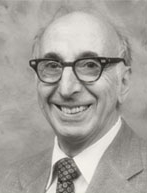
Richard Donchian is the origin point. Before Richard Dennis, before the Turtles, before the modern CTA industry existed, Donchian was building systematic rules for following commodity price trends and publishing his findings for anyone willing to read them. His work in the 1950s and 1960s established the conceptual and mechanical foundation that every trend following system since has built upon.
His central idea: do not forecast prices. Instead, identify a trend already in motion and get aboard it. Remove emotion from the decision. Let rules determine entries and exits. The approach sounds obvious now. In 1950, it was radical.
Richard Donchian is known as the father of trend following. His original trend following ideas form the basis for all trend following success that has followed, including Richard Dennis. Donchian’s original methods involved the use of a moving average for the exit indicator portion of his system. Richard Dennis, however, did not use a moving average for entry/exit and concentrated much more heavily on money management than Donchian. Money management accounts for 90% of the Turtle success story. Then once you have that down, your psychology accounts for 100% of your success.
Donchian Biography
From the Richard Donchian Foundation:
Richard Davoud Donchian was born in Hartford, Connecticut, in September, 1905, the son of Samuel B. Donchian and Armenouhi A. Davoud, both of whom migrated from the Armenian province of Turkey in the 1880’s. Richard attended public schools in Hartford, the Taft School in Watertown, Connecticut, and graduated from Yale University in 1928 with a B.A degree in economics. Upon graduation, he entered the family’s oriental rug business. Although he appreciated studying about and collecting oriental rugs, he became more interested in the financial markets after reading the book about Jesse Livermore, Reminiscences of a Stock Operator. After suffering personal financial losses during the market crash of 1929, he began his study of technical analysis, believing that only the chartists made sense and money. While continuing to serve as a Vice President of the Samuel Donchian Rug Company, he became a securities analyst and account executive with Hemphill, Noyes & Co. in 1933. During World War II, he participated in the invasion of Sicily and later served as an Air Force Statistical Control Officer in the Pentagon. After the war he returned to the world of investments as a private investment adviser and economic analyst, remaining self-employed until 1960. In 1948 his focus changed from securities to the trading of commodities. He created “Futures, Inc.,” a pioneer publicly held commodity fund, based on the principle of diversification, an idea new in this field. He was later dubbed the ‘father of modern commodities trading methods,” having developed a technical trading method called “trend following,” which presupposes that commodity prices will move in long sweeps like bull and bear markets.
He used a mathematical system based on moving averages of commodity prices. During this period, he authored numerous articles on both securities and futures trading. In 1960 he became associated with Hayden Stone Inc., as Director of Commodity Research. From then until his death on April 24, 1993, he was associated with the various configurations of Hayden Stone and Shearson Lehman Brothers (now Smith Barney) and was a Senior Vice President. Also in 1960 he became responsible for writing a weekly technical newsletter entitled “Commodity Trend Timing,” which he continued to author for 19 years. In 1963 he was awarded a Chartered Financial Analyst degree from the Institute of Chartered Financial Analysts at the University of Virginia. Mr. Donchian was best known for his pioneer work in the field of commodity futures money management. He was a member of the Commodity Exchange, Inc., the New York Cotton Exchange, the New York Futures Exchange, the New York Society of Security Analysts, the American Statistical Association, the National Association of Future Trading Advisers, the Financial Forum, and listed in Who’s Who in America. In June 1983 “Managed Accounts Report” selected him as the first recipient of its “Most Valuable Performer Award,” for outstanding contributions to the field of commodity money management.
42 Years Before It Clicked
A 1982 Forbes profile captured what patience in systematic trading looks like across a lifetime. Donchian spent 42 years working on his price charts — first for stocks, then commodities — while managing modest sums. He was around 66 when his system began producing the results he had always believed it would. By the time Forbes wrote about him, he was managing $27 million at Shearson/American Express, earning close to $1 million a year in fees and commissions. He had not changed his approach. The market had finally provided the conditions his system was built for, and he was still there to capture them.
That timeline is a useful counter to the modern assumption that a strategy should prove itself within months. Donchian’s edge was real from the beginning. The question was always whether the trader would survive long enough to let it express itself.
His Influence on Ed Seykota and the Modern CTA Industry
Donchian’s reach extended well beyond his direct students. Ed Seykota, one of the most successful systematic traders of the twentieth century, traced his introduction to mechanical trend following to a Donchian letter he read around the time he graduated from MIT. That article describing a purely mechanical system that could beat the markets, became the foundation for Seykota’s own work and, through him, influenced a generation of traders who came after.
By 1979 or 1980, one observer at an early MAR conference counted 19 CTAs managing public funds and traced 16 of them back to Donchian; either through direct employment or through capital he had invested with them. He was, as one student put it, the lone voice in the wilderness for decades. His thinking eventually became the dominant thinking of the entire industry.
Donchian and His Students
Richard Donchian, though now deceased, left many students that still trade or run money management firms. A sampling of his students include:
- Nelson Chang worked for Donchian: Started Chang-Crowell Corp
- Robert Crowell worked for Donchian: Started Chang-Crowell Corp
- Barbara Dixon worked for Donchian: Started Spackenkill Trading
- Bruce Terry worked for Chang-Crowell Corp
Paul Dean and Brent Elam of TrendLogic had this to say about Donchian and success:
What’s the point? Trading as a trend follower is a learned behavior. Not everyone is going to trade this way. Most people want no more complexity in their life than to buy and hold. Most people don’t want to think or learn about new methods. It takes discipline. But, if the students of Richard Dennis or the students of Richard Donchian don’t provide inspiration as to how important learning the right method is toward achieving success…well buy a mutual fund and shoot for 12% a year.
Trend Following Systems
Want to learn more and start trading trend following systems? Start here.
