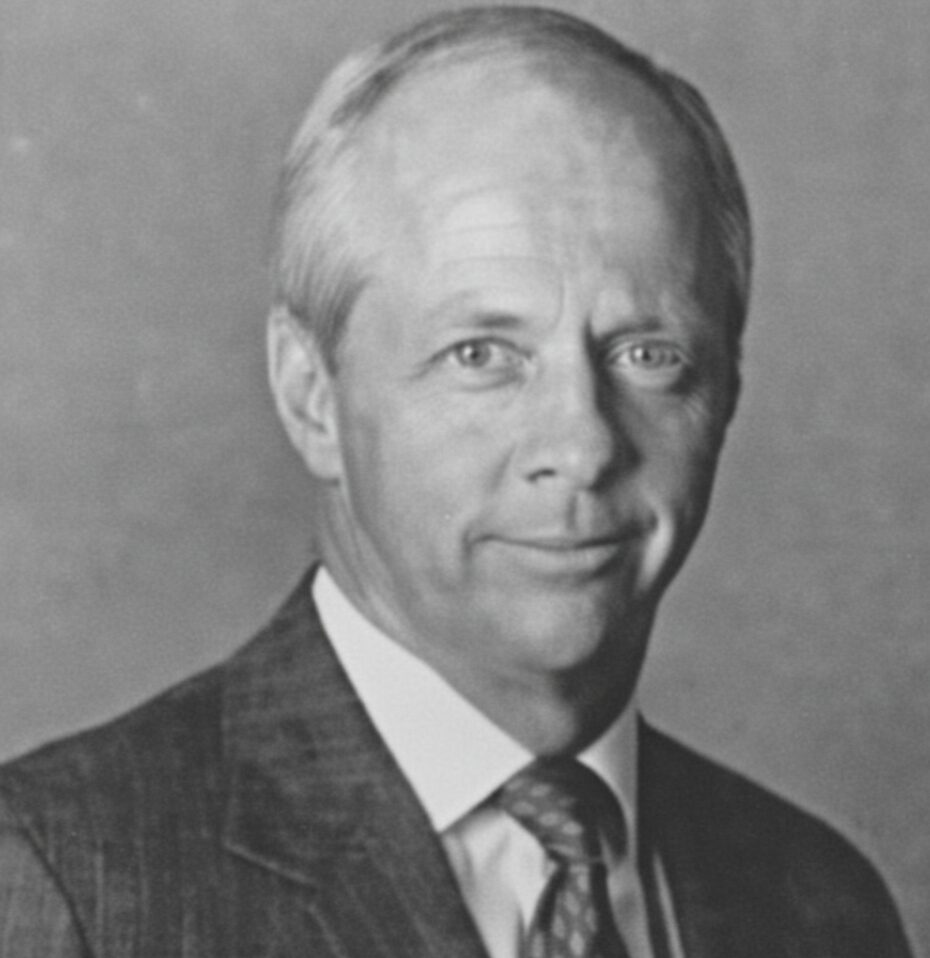
Keith Campbell did not set out to build a trend following empire. He was heading to Hawaii in the 1960s and took a job in California instead because he could ski and surf there. A newspaper ad for a roommate landed him Chet Conrad, a commodity broker. Conrad pulled him into trading. The rest followed from there.
That origin story matters because it captures something true about Campbell’s career: he built lasting things out of practical decisions, not grand vision. The Campbell Fund, which he began trading on January 1, 1972, is the oldest continuously operated private commodity pool in the United States. That distinction is not marketing language; it is a verifiable fact that no other futures fund can claim.
The Committee Lesson
Before Campbell took sole control, he learned his most important early lesson the hard way. In 1971 he assembled $60,000 from 12 investors to form his first futures fund, run by three advisors: a fundamentalist, a bar chartist, and a point-and-figure advocate. The experiment failed to produce results. Campbell’s conclusion was blunt: do not make trading decisions by committee.
That insight, that clear accountability and a single decision framework outperform consensus, is one of the foundations of systematic trend following. A committee introduces exactly the kind of deliberation and second-guessing that a rules-based system is designed to eliminate. Campbell learned this before most traders had even framed the question.
From the original Futures Magazine profile:
Keith Campbell was on his way to Hawaii in the 1960s when he took a job in California instead because he could both ski and surf there. When his roommate moved out of their California apartment to get married, Campbell placed a newspaper ad for a new one. His choice: Chet Conrad, a commodity broker. (Conrad) got me into trading as a customer, Campbell recalls. But he was always moaning he didn’t have enough money to trade. In 1971 Campbell put together $60,000 from 12 investors to form his first futures fund with three advisors; a fundamentalist, a bar chartist and a point-and-figure advocate. And he learned his first lesson: Do not make decisions by committee when trading futures! Another fund, the Campbell Fund, started in August 1971; Campbell himself took over trading it on Jan. 1, 1972. It is the oldest commodity fund still trading today. By the time Campbell, Isaacson and Conrad split up a few years later, Conrad had turned a borrowed $10,000 into $3 million with some gutsy trading in sugar and moved to Lake Tahoe, Nev.
What Campbell and Company Built
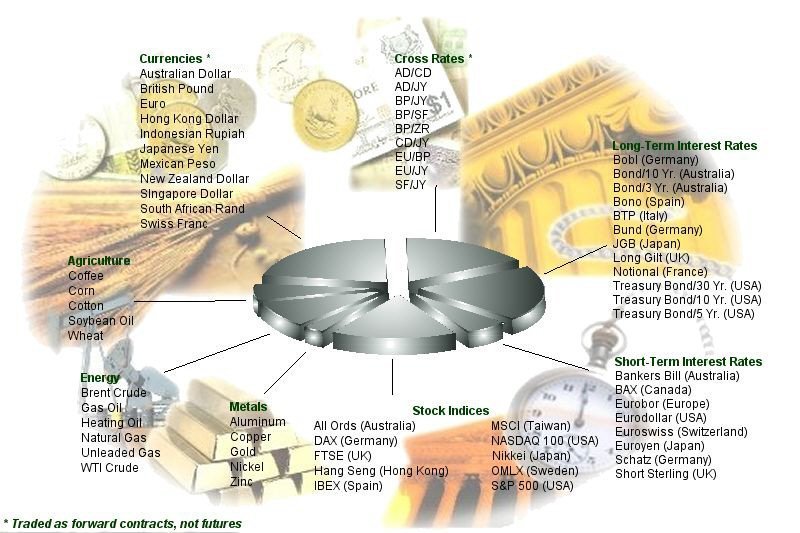
Campbell & Company is based in Baltimore, Maryland. At its peak the firm managed around $5 billion in assets, making it one of the largest futures trading advisors in the world. The firm trades global asset classes across interest rates, currencies, commodities, and equity indices using systematic models across multiple time horizons. See chart of recent Campbell portfolio.
The firm’s own description of its philosophy:
Since its founding in 1972, Campbell & Company’s goal has been to achieve attractive levels of return for its clients while maintaining prudent levels of risk. We have consistently used the same disciplined approach to trading, while maintaining a continuous commitment to research in order to create new trading strategies and improve existing strategies. The results of our efforts have been gratifying, and Campbell & Company is now one of the largest futures trading advisors in the world. While there have been periods during which our clients have incurred losses, over the long run, an investment in Campbell & Company’s portfolios has produced attractive returns with reasonable volatility.
What stands out in that statement is what it does not say. There is no claim that losses will be avoided. There is no promise of consistent monthly returns. The language is honest about drawdown periods, which is the hallmark of a firm that has actually lived through bear markets in managed futures rather than one pitching a hypothetical track record.
The Founder as Business Builder
Keith Campbell’s distinction within the CTA world is that he was not a scientist who became a trader. The Hedge Fund Journal described him as an “inspirational business builder” rather than a quantitative visionary; the kind of founder who creates an institutional culture capable of surviving and adapting long after the original systems have been refined. That is a harder thing to build than a model.
The firm eventually moved beyond pure trend following to add non-trend strategies under the PRISM program, covering carry, relative value, and other systematic approaches. But trend following remained the core. As the firm put it: “We do not feel we ever moved away from trend. It’s at our core where we began.” The additions were diversification, not substitution.
Campbell & Company received The Hedge Fund Journal’s CTA and Discretionary Trader Award 2024 for best risk-adjusted performance over 4, 5, and 7 years ending December 2023 in the Trend Follower category for funds above $1 billion in assets.
Why the Campbell Story Matters
Most trend following firms that launched in the 1970s are gone. The ones that survived did so by doing two things: maintaining the core discipline of following price trends without overriding the system, and evolving the research without abandoning the philosophy. Campbell has done both for more than 50 years.
The lesson from the committee failure in 1971 still applies. Trading by consensus, whether across advisors or across competing internal factions, degrades signal quality. What works is a defined process, applied with discipline, across enough markets and time to let the edge express itself.
For more on the traders and firms that built the trend following industry, see the profiles of John W. Henry and Bill Dunn, two contemporaries who built their own decades-long track records from the same era. Visit the Campbell & Company home page for current information on the firm.
TurtleTrader is Michael Covel’s site. So is TrendFollowing.com.
That’s where you’ll find his trading systems, courses, 1,400+ podcast episodes and much more.