

Michael Cavallo had a Harvard MBA and was working in Boston in commodities for the beverage department at General Cinema when he came across Richard Dennis’s classified ad in 1983. His reaction was immediate: “I nearly fell out of my seat when I saw it. He was looking for a starting shortstop. I couldn’t believe it. This is sort of a dream job for me. I immediately responded.”
Dennis selected Cavallo as one of roughly 23 traders across the 1984 and 1985 cohorts. The Wall Street Journal’s 1989 Turtle performance table showed Cavallo with a 107.7% average annual compound return from 1985 to 1988, with a quarterly range of -54.7% to 195.5% — numbers that reflect both the power of the system and the volatility that came with it.
The Experiment
Checking in With ‘Turtle Traders’ 30 Years Later by Yolanda Perdomo:
The Eddie Murphy comedy “Trading Places” celebrates its 30th anniversary this summer. The box office hit explored whether a person who has no formal training can make millions in the markets. The two main characters, Mortimer and Randolph had two counterparts in Chicago traders William Eckhardt and Richard Dennis. Dennis reportedly made his first million by the age of 25. A few months after the movie hit theaters, Eckhardt and Dennis put an ad in the newspaper looking for new talent.
“The ad looked like the New York Yankees looking for a starting shortstop,” Michael Cavallo said. He was already in commodities, for the beverage department at General Cinema. But the idea of working with Dennis was on a whole other level. The ad read something like this: a group of applicants would be trained in Dennis’ proprietary concepts, trade only for him and get a percentage of the profits.
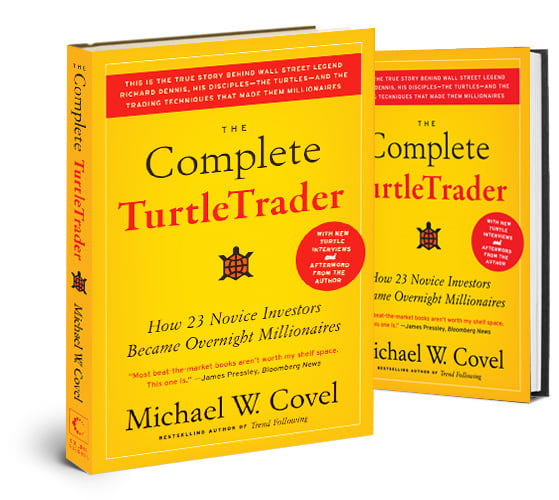
Chicagoan Jim DiMaria was among those picked. DiMaria says he got an $18,000 draw. “That was enough to pay my grocery bills and I knew that was going to be secure,” DiMaria said. The name turtle came from Dennis, who thought he could train traders as fast turtles were raised in farms. Michael Covel is the author of The Complete Turtle Trader. He says Dennis and Eckhardt believed the markets were a reflection of people and their decision-making or their human behavior.
“If a market was moving up, you want to be following that trend, if it’s going down, you want to be following that trend and the idea being if the market is moving down, you’re shorting the market to make money if the market drops,” Covel explained. Dennis and Eckhardt took around 20 people: about half with no business background. Michael Carr is a Wisconsin native who worked for the company that created Dungeons and Dragons. Carr and the other Turtles had three and a half to four years to make money after two weeks of training. He says part of the recruiting process included answering personality questions like “how important is money to you and why? and ‘would you rather be good or lucky?'”
Carr, Cavallo and DiMaria won’t say how lucky they were. But they didn’t lose money. But not all of the Turtles made money. Several were dropped early in the program. Richard Dennis and William Eckhardt declined to be interviewed for the story. DiMaria would describe the experiment as a success. “If this were in fact the dollar bet (like the one made in Trading Places), which is the theory, (then, yes) can trading be taught…but maybe not to just anyone,” DiMaria said. Michael Covel says the lessons learned from the Turtle Traders continue today. “I think they’re seen as visionaries and very successful traders,” Covel said. Today, Cavallo is in Massachusetts and works for the Clinton Foundation. Carr is a freelance writer in Wisconsin. DiMaria is still trading with his own firm.
Cavallo’s Decision to Talk
When Michael Covel was researching The Complete TurtleTrader, several Turtles who had agreed to be interviewed were later pressured by other members of the group to withdraw. Cavallo was among those pressured. He declined to back out. His reasoning was direct: he thought the story should be out there. That decision put him in a small minority among the original cohort willing to speak on the record about the experiment, the training, and what came after.
That detail matters because it speaks to Cavallo’s character. Dennis was selecting for traders who could follow a system under pressure, override their emotions, and act on evidence rather than social consensus. Cavallo’s willingness to cooperate with Covel against peer pressure is consistent with the same disposition Dennis was looking for in 1983.
Life After Trading
Cavallo later became Executive Director of the United States Chess Federation — a role documented in the Sam Sloan article linked below. The move from futures trading to chess administration is less surprising than it sounds. Both domains reward pattern recognition, probabilistic thinking, and the ability to hold a position under pressure. The Turtle cohort produced an unusually wide range of post-trading careers, and Cavallo’s trajectory is among the more interesting.
Additional Articles
- Turtle Trading: A Market Legend by Investopedia.com
- Investment Special: The Trend is Your Friend by Tim Price
- Michael Cavallo is the New USCF Executive Director by Sam Sloan
Trend Following Systems
Want to learn more and start trading trend following systems? Start here.
