
Most traders measure themselves by how often they are right. Win rate becomes the primary metric of success. A system that wins 70% of the time feels like a good system. A system that wins only 40% of the time feels like it needs fixing. This intuition is deeply wrong, and understanding why is one of the most important shifts a trader can make.
Winning percentage in your trading, does it really matter? Did you know that trend followers win only 40% of the time on average?
What Babe Ruth Knew About Losing
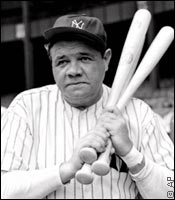
George Herman Ruth, hero of New York, hero of baseball and arguably one of the greatest sports legends of all time, will always be known for his home runs. But he had another habit that isn’t talked about much: striking out a lot. In fact, with a lifetime batting average of .342, the Babe spent almost two thirds of his time trudging back to the dugout. From a pure numbers perspective, he saw more failure at the plate than success. But when he got a piece of one, well, it was enough to give any pitcher nightmares. There’s a reason why Ruthian is still a well known adjective in sports writing, conveying the awe and power of a grand slam in the bottom of the ninth.
Ruth fully understood that the hits help a whole lot more than the strikeouts hurt. He gave his philosophy in a nutshell: “Every strike brings me closer to the next home run.” And when reporters asked him how he dealt with the occasional slump, he replied: “I just keep goin’ up there and keep swingin’ at ’em.”
The lesson for traders is this: If you have realistic confidence in your method and yourself, then temporary setbacks don’t matter because you will come out ahead in the long run.
This is not optimism or motivational framing. It is math. A system that wins 40% of the time but makes three times as much on each winner as it loses on each loser is highly profitable. A system that wins 70% of the time but loses twice as much on each loser as it makes on each winner is a slow bleed. The winning percentage tells you almost nothing without knowing the magnitude of wins versus losses. Ruth understood this intuitively about baseball. Trend followers have built it into their systems by design.
Blue Collar Joe vs. The Entrepreneur
To further illustrate the point, consider a modern day example: the blue collar joe versus the entrepreneur. The blue collar joe is paid the same lump sum every two weeks like clockwork, with the occasional miniscule raise paced to keep up with inflation. In terms of winning percentage, blue collar is king: his ratio of hours worked to hours paid is one to one, a perfect 100%. He has a steady job and a steady life. Of course, the security he feels is something of an illusion, his paycheck comes at the whim of his local economy, his industry, and even the foreman of his plant. And the pay isn’t exactly impressive. It gives him a solid, livable life, but not much more.
In contrast, consider the entrepreneur. His paydays are wildly irregular. He frequently goes for months, sometimes years, without seeing tangible reward for his sweat and toil. His winning percentage is, in a word, pathetic. For every ten big ideas he has, seven of them wind up in the circular file. Of the remaining three, two of those fizzle out within a year, another big chunk of time, money and effort down the drain. But we can’t feel too sorry for the poor entrepreneur who spends so much time losing. He has a passion for life, he controls his own destiny and that last idea paid him off with an eight figure check.
The analogy maps directly onto trend following. Most trades are small losses. A handful of trades each year produce the majority of the returns. The system that produces 40% winners but lets each winner run without a profit cap is the entrepreneur. The system that wins 70% of the time but exits every trade at a small, fixed target is the blue collar worker: consistent, modest, and ultimately unable to compound to anything significant. The drawdown periods in trend following feel like the entrepreneur’s dry spells. They are survivable, expected, and a necessary feature of the approach that produces the large payoffs.
The Soros Summary
The irrelevance of winning percentage is nicely summed up by another legend, George Soros: “It doesn’t matter how often you are right or wrong, it only matters how much you make when you are right, versus how much you lose when you are wrong.”
That sentence contains the complete framework. Two numbers: the average win and the average loss. Their ratio, not the win rate, is what determines long-term profitability. A trend following system is designed around this ratio explicitly. Losses are cut quickly at predefined levels, keeping the average loss small. Winners are held for as long as the trend continues, with no profit target to limit upside. The result is an average win that is significantly larger than the average loss, which means the system is profitable even when fewer than half of all trades succeed.
This is why the TurtleTrader rules placed so much emphasis on exits over entries, on risk management over signal quality, and on letting winners run without interference. The system was built explicitly around Soros’s principle, whether or not that framing was used. The math works. The psychology of following a system that loses more often than it wins is the harder problem, which is exactly why most traders never stay with it long enough to capture the returns it produces. For the full story of how the original TurtleTraders were trained to hold through losing periods and trust the long-run math, see the TurtleTrader story.
Frequently Asked Questions
Do trend followers really only win 40% of the time?
Yes, on average. Most trend following systems produce winning trades on fewer than half of all entries. Most breakouts fail to develop into sustained trends, resulting in small losses. The profitability comes from the minority of trades that do catch a significant trend, which are held long enough to produce returns large enough to more than offset all the small losses.
Why doesn’t a low win rate mean a system is broken?
Because profitability depends on the ratio of average win to average loss, not on the win rate alone. A system that wins 40% of the time but makes three times as much on winners as it loses on losers is mathematically profitable. The win rate only matters in context of the magnitude of outcomes on each side.
What is the Babe Ruth lesson for traders?
That every strike brings you closer to the next home run. Losses in a good system are not evidence that the system is failing. They are the expected cost of staying in the game long enough to catch the large moves that drive returns. Ruth’s philosophy of just keep swinging is the same as the trend follower’s discipline of taking every signal regardless of recent results.
How does the entrepreneur analogy apply to trend following?
The entrepreneur fails most of the time but one success pays off everything and more. Trend following works the same way. Most trades are small losses. A handful of trades each year, the ones that catch and hold major trends, produce the bulk of annual returns. The system needs the losing trades to keep showing up for the signals, just as the entrepreneur needs to keep trying ideas to find the one that pays off at scale.
What did George Soros mean when he said winning percentage doesn’t matter?
That the only numbers that matter are how much you make when you are right and how much you lose when you are wrong. A trader who is right 30% of the time but makes ten times as much on winners as losers will outperform a trader who is right 70% of the time but only makes slightly more on winners than losers. The ratio of win magnitude to loss magnitude is the real measure of a system’s edge.
Trend Following Systems
Want to learn more and start trading trend following systems? Start here.
