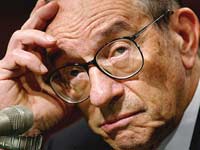
John W. Henry has offered a famous quote on the Fed:
I know that when the Fed first raises interest rates after months of lowering them, you do not see them the next day lowering interest rates. And they don’t raise rates and then a few days later or a few weeks later lower them. They raise, raise, raise, raise…(PAUSE)…raise, raise, raise. And then once they lower, they don’t raise, lower, raise, lower, raise, lower. Rather they lower, lower, lower, lower. There are trends that tend to exist, whether they are capital flows or interest rates….if you have enough discipline, or if you only trade a few markets, you don’t need a computer to trade this way [trend following].
Why worry about what the Fed is going to do? You can’t predict its actions. Even if you could predict the Fed’s next move it would still not tell you how much to buy or sell. The great traders setup their trading strategies from the beginning to react to trends as they happen. Trend followers predicate their strategy on markets always changing. A changing marketplace has no impact on you whatsoever if your trading style has been developed from the ground up to respond to change.
Think about it. If you have a plan in advance then you are prepared for anything. Trend followers are always prepared for unpredictable Fed actions, wars, rumors of war, elections, scandals, embargoes, treaties, droughts, floods and market crashes. Trend followers do not wait on their hands and knees unable to think before a Fed action. Their plan is in place. They react to what happens. Sure, it might be counter intuitive, but what is the better way to handle uncertainty?
Said another way by Clayton Christensen:
Wall Street analysts are theory-free investors. All they can do is react to the numbers. But the numbers they react to are measures of past performance, not future performance. That’s why they go in big herds. Wall Street professionals and business consultants have enshrined as a virtue the notion that you should be data-driven. That is at the root of the inability of companies to take action in a timely way.
Why the Fed Obsession Is Counterproductive
Henry’s observation about interest rate trends is the clearest possible demonstration of why trend following works on macro policy: because policymakers cannot change direction quickly. The Fed raises rates in cycles. The cycles last months or years. Within those cycles, each meeting produces either another raise, another hold, or the beginning of a reversal — but not random alternation. The persistence Henry describes in the raise-raise-raise pattern is exactly the structural characteristic that systematic trend following captures in interest rate markets.
Attempting to predict which meeting will be the pivot is the wrong question. The market’s reaction to each meeting, expressed through interest rate futures and bond prices, is the correct question. When rates have been rising for an extended period and then the first cut occurs, the price response in the bond market signals the regime change. The trend follower who was positioned correctly in bonds and interest rate futures captured the entire move without ever predicting which specific meeting would produce the pivot. The fundamental analyst who correctly predicted the pivot date two meetings early was positioned before the market moved and potentially suffered opportunity cost or adverse price action in the interim.
Christensen’s Innovator’s Dilemma insight applied here is the most counterintuitive part. His critique of Wall Street analysts is that they are “theory-free investors” who react to historical data rather than using frameworks to anticipate future outcomes. He sees this as a failure. From a trend following perspective, reacting to what the data shows about current market conditions is correct. The failure Christensen identifies in Wall Street is not the reaction to data but the reaction to the wrong data — past performance numbers that measure what has already happened rather than systematic signals that identify what is currently developing.
The herd behavior Christensen describes follows directly from this: analysts reacting to the same past performance numbers will reach the same conclusions and take the same positions, producing the crowded consensus trades that trend followers exploit on both the entry and exit sides. The trend follower is not reacting to past performance. They are reacting to current price movement. When the consensus is wrong and the price moves against them, the trend follower is positioned in the direction of that movement.
Frequently Asked Questions
Why do trend followers ignore the Federal Reserve?
Because they cannot predict its actions and do not need to. Their system reacts to what markets do in response to Fed actions rather than attempting to predict what those actions will be. The price movements in interest rate futures and bond markets that follow Fed decisions are the signals the system reads. Whether the rate decision was the expected one or a surprise is irrelevant — the system responds to the price movement it produces, not to the decision itself.
What does John W. Henry mean by raise-raise-raise and lower-lower-lower?
He is describing the structural persistence of Federal Reserve policy cycles. The Fed does not alternate randomly between raising and lowering rates. When it begins raising, it continues raising for an extended period. When it shifts to cutting, it continues cutting. These persistent policy trends produce persistent trends in interest rate markets that systematic trend following is specifically designed to capture. The trend follower does not need to predict when the cycle will turn; they follow the turn when it begins and hold the position as long as the trend continues.
How does a plan in advance prepare trend followers for unpredictable events?
Because the plan does not depend on knowing what events will occur. It defines what the system will do in response to whatever price movements occur. When the Fed surprises markets, when a war breaks out, when an election produces an unexpected result, the system’s response is the same: read the price movement the event produces and act according to the rules. The preparation is not specific to any anticipated event. It is preparation for any price movement in any direction in any market, which means it covers every event regardless of whether it was anticipated.
Want to learn more and start trading trend following systems?
Start here