Proprietary Trading Systems for Stocks, Futures, Currencies, ETFs, LEAPS & Commodities
Trading Insights that Government, Media and Wall Street Don't Want You to Know

Learn How Now

Trend Commandments

Michael Covel (FT Press)

Purchase | Reviews

The Little Book of Trading

Michael Covel (Wiley)

Purchase | Reviews

The Complete TurtleTrader

Michael Covel (Collins)

Purchase | Reviews

Trend Following

Michael Covel (FT Press)

Purchase | Reviews

Broke (Film DVD)

Michael Covel

Purchase | Reviews

Holy Grails

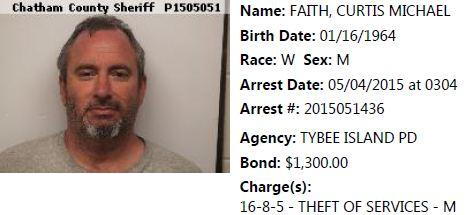
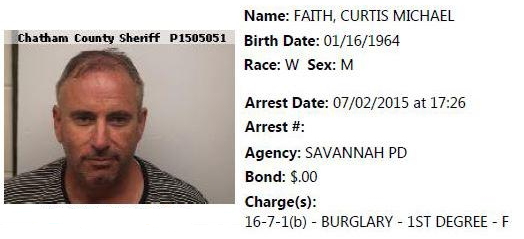
Curtis Faith: Firm Permanently Barred by U.S. Government

Curtis Faith
Curtis Faith

Curtis Faith: Failed Turtle

Multiple government documents, a Faith family member, other Turtles, performance records, direct interviews with Faith's former business associates, a former employee and Faith's own words show him to be something different than he represents.

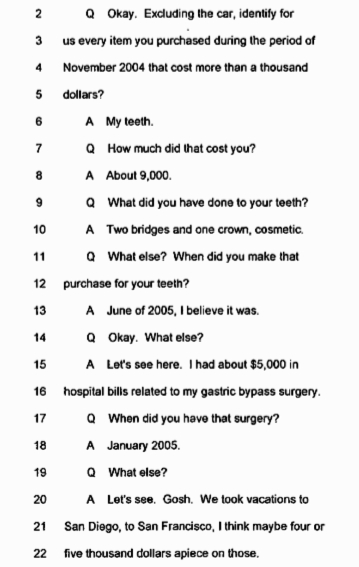
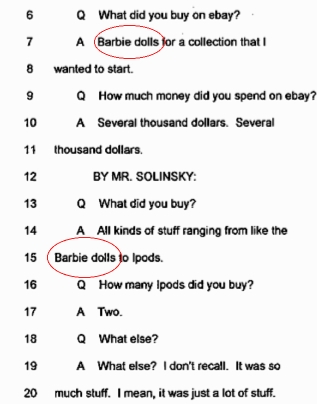
For example, the following two depositions describe how Curtis Faith's firm Acceleration Capital imploded: Deposition One and Deposition Two. Curtis Faith's then partner Plyam explains how he and Faith met, what type of trading system they used, the ownership breakdown of Acceleration Capital, Faith's background, the management fees, how much they put up to start Acceleration Capital and Faith's subsequent disappearance. Perhaps most alarming, a male employee was stealing money from Acceleration Capital to buy trips, buy cars, to pay for a gastric bypass surgery, to buy gifts for his boyfriend and to buy barbie dolls on eBay (Many files obtained through the U.S. Freedom of Information requests).

Acceleration Capital permanently surrendered registration with the CFTC via settlement in January 2007 for what the CFTC believed were violations of the Commodity Exchange Act (The only objective accounting regarding Curtis Faith is found in "The Complete TurtleTrader").

Curtis Faith Failed Turtle
Curtis Faith

More:

Curtis Faith on Abraham Lincoln (2010)

Curtis Faith, after recently announcing a gut feel 'sell call' of world markets, announced that Abraham Lincoln was gay. Video shows Faith possibly impaired:

Update: Video can be downloaded here.

Curtis Faith on Obama (2008):


Update: Video removed by Faith. Download to be added soon.

•••

The only objective accounting regarding Faith is found in "The Complete TurtleTrader" (Chapter 12 and Afterword of paperback edition).


Curtis Faith: Trading by Your Gut Doesn't Work

Curtis Faith was recently interviewed. The interview ignored Faith's well documented controversies along with the meltdown of his money management firm. The questioner David Penn allowed Faith's statements to go unchallenged:

CURTIS FAITH statement #1: "...I think that this plays out if you look at the book that Michael Covel wrote about the Turtles, and some perspectives on my trading. I didn't know this at the time, but some of the other Turtles, in interviews with Mike, had said that I was overtrading or that I was trading too hard."

Correction: No evidence has ever been produced of any Curtis Faith trading gains. In fact, as The Complete TurtleTrader shows (and Faith's own words). Faith refers to events that took place in 1984, but ignores his firm's 2007 permanent bar by the United States government.

CURTIS FAITH statement #2: "I think there's always going to be a limit to what we can analyze and what we can put together in terms of rules and systematic trading methodologies. Even when we have those limits, it is a disadvantage if we don't consider what other things could do with our right brain. Good examples are danger signs, what happens on some occasions when the market just behaves in an unusual manner."

Correction: How does Faith define "unusual manner"? No top trader trades like this. It appears Faith wants to just sell a book.

CURTIS FAITH statement #3: "I know a lot of really good traders who are very systematic who will get out of the market when those sorts of things happen. One could argue that that's going against the system, or one could argue that there are certain types of behavior in the markets that the system doesn't anticipate. I used to be of the mind that you should just follow the system no matter what. But I do think it's reasonable to look at it from a pure risk management perspective and say, at certain times, certain things happen, and you really ought to be more careful. A good example I remember comes from the crash of 1987. Looking back on it, the prudent thing would have been to get out of my positions at that point in time simply because the uncertainty of the markets raised the risks of a huge move one way or the other. And that it was not something that was anticipated by all the testing that we had been doing to develop the system. I say this even though I made money on the day of the crash. At those times, it was almost like all bets are off because of this crazy thing that happens. The same thing happens when you have a situation like 9/11. If anybody could get out of their positions at even, I would still consider that to be a prudent thing. You don't make money off the gaps that happen on those giant, black swan events."

Correction: Good traders have systems in place to deal with the unexpected. No one can predict events in advance. No trend follower predicted October 2008, but they all made money. Faith doesn't understand the basics.

CURTIS FAITH statement #4: "In general, unless you're betting for them like an options trader might be doing, you don't want that kind of random volatility thrown into the mix. So it's wise to be able to get out of the market in those scenarios if you can. And you can't really program that into a system. So that's something that would have to be done on a discretionary basis. Looking back on it, that's something that I hadn't done enough of and I do more now."

Correction: 'Randomness' of markets is normal. Faith says to get out "if you can". He might as well be sitting at the craps table with that logic. It's the exact type of statement one would expect to hear from a person whose money management firm ended in a permanent CFTC ban. Caution should be taken when listening to this particular ex-Turtle.

NOTE: If you want to learn trend following techniques and systems through advanced home study and or seminars for all traders click here. If you want to learn about trend following trading in general there is one definitive text the bestselling classic "Trend Following: Learn to Make Millions in Up or Down Markets" by Michael Covel. If you want to learn about the most famous group of trained trend following traders, the Turtles and their teacher Richard Dennis, "The Complete TurtleTrader" by Michael Covel is the only complete biography (with all of the Turtle rules) available. If you have any questions you can reach us immediately via phone or email.

Warren Buffett and Charles Munger: Trend Traders?

I thought you could add a comment to your Buffett page about the total irrelevance of his method to ordinary investors. Buffett does not make his money on the markets. He takes control of companies and sets performance targets. He then uses their cash reserves for more acquisitions. This is why he buys insurance firms (which have free cash) & ignores tech stocks (which only have burn rates). Obviously this has nothing to do with trading. Masses of people have been misled by all the hype claiming they can use his methods.Paul B.

Buy and hold is toast as an investment strategy. Read the Warren Buffett articles at TurtleTrader:

Warren Buffett seems to make the buy and hold illusion look smart, but let's take a look at why this strategy is dangerous to your portfolio. Below are excerpts from Warren Buffett and Charles Munger's remarks at their annual shareholder meeting for Berkshire Hathaway. TurtleTrader editorial comments about their remarks follow each quote:

We understand technology products and what they do for people. But we don't understand the economics ten years out -- the predictability of it. Is it comprehensible? We do think about it, but we don't get anyplace. We would be skeptical of anyone who says they can. Even my friend Bill Gates would agree.Warren Buffett

TurtleTrader® comment: How can the trends (up and down) of Microsoft, Cisco and Sun be ignored? Buffett bought Dairy Queen, Gillette and Coke 30 years ago. That alone must not warrant blind following. If you trade from a trend following perspective you don't need to know anything about tech companies' fundamentals to trade them long or short.

If you buy something because it's undervalued, then you have to think about selling it when it approaches your calculation of its intrinsic value. That's hard. But if you buy a few great companies, then you can sit on your $%@. That's a good thing. Buffett added, We want to buy stocks to hold forever.Charlie Munger

TurtleTrader® comment: Nothing is forever. The best companies go belly up. Trading is not about buying into companies. Trading is about making money. You must rethink your central objective if all you do is buy and hold.

Think about a company with a market cap of $500 billion. To justify paying this price, you would have to earn $50 billion every year until perpetuity, assuming a 10% discount rate. And if the business doesn't begin this payout for a year, the figure rises to $55 billion annually, and if you wait three years, $66.5 billion. Think about how many businesses today earn $50 billion, or $40 billion, or $30 billion. It would require a rather extraordinary change in profitability to justify that price.Warren Buffett

TurtleTrader® comment: If your trading technique is designed to ride a trend then firm earnings are not important, nor is any other fundamental data point for that matter. You don't have to be a financial analyst or accountant to make money in the market. See Microstrategy (MSTR) example.

We've seen companies with market caps of tens of billions of dollars that are worthless, and seen other companies that trade at 20-25% of their true value. It eventually gets sorted out. But the speculative mania in one area is not creating equivalent discounts elsewhere. We're not finding businesses at half their real value today. Forty-five years ago, I had lots of ideas and no money. Today, I have a lot of money but no ideas.Warren Buffett

TurtleTrader® comment: There have been and will continue to be trends everywhere, where you can make money long and short.

Reader Feedback

This page makes Buffett followers angry. Here are some comments:

Why not look at the trend of Buffett's stocks and see why no one comes close to the discipline he possesses in holding onto a trending situation.Web Visitor

The fact that he didn't buy Intel or Microsoft is just nitpicking.Web Visitor

The fallacy of the Buffett legend is the buy and hold mantra he helped promote (which is not exactly what he did to get rich). Buy and hold is not the panacea Wall Street and Buffett proclaim.

More Feedback

The Buffett page continues to provoke feedback from some readers:

Whilst I recognize and can appreciate your different trading philosophy to Mr. Buffett I am appalled at your presumption to criticize a man that has become reputably the second richest man by employing his techniques. Maybe in 40 years time when you have achieved the same success you will have earned the right to offer such sharp criticism. No I am not an investor in his company/s nor have I followed his lead but I do respect and admire the man for what he has achieved, through his philosophy of investment and maybe if the corporate raiders followed his example the market place would be healthier. By the way IT stocks are not doing too well are they?Web Visitor

We consider the last sentence to be the only comment worth responding to. The reader does not understand the nature of trend following. We hope it is clear to you that Trend Following garners profits in both up and down markets. Trend Followers don't fall in love with any one market or sector. They take opportunity as it comes and simply make money. Up or down, it doesn't matter whether it's a tech stock or not.

More on Buffett

Note: The TurtleTrader® site will continue to offer a well-rounded slate of positive reinforcement articles along with critique articles. The combination of the two styles helps the learning process (Negative?).


NOTE: If you want to learn trend following techniques and systems through advanced home study and or seminars for all traders click here. If you want to learn about trend following trading in general there is one definitive text the bestselling classic "Trend Following: How Great Traders Make Millions in Up or Down Markets" by Michael Covel. If you want to learn about the most famous group of trained trend following traders, the Turtles and their teacher Richard Dennis, "The Complete TurtleTrader" by Michael Covel is the only complete biography (with all of the Turtle rules) available. Key introductions:

If you have any questions you can reach us immediately via phone or email

Stop Chanting: No More Fundamental Trading Please!

What is the difference between Mary Meeker and the guy below?

There is none.

Gary Boire, Vice President of Investments at Fahnestock & Co. Inc., a NYSE brokerage firm in Portsmouth, acts as Chief Tecumseh, as he casts his evil spell on the current Bear Market. As Investment Representative, Bruce MacIntyre plays a ceremonial drum, the chief chants to rid the stock market of it's downswing. It is the chief's 4th appearance over the past 28 years and he swears the superstitious tradition works in improving the market.

Some might find the comparison between Meeker and Chief Tecumseh unfair. Those people are out of touch.

Why Many Traders Lose Money?

  • They lack discipline: It takes an accumulation of knowledge and sharp focus to trade successfully. Most traders would rather listen to the advice of others than take the time to learn a trading system. Let’s face it: Most people are lazy when it comes to trading. Although money may be the most important concern they have, and earning it, the most important goal they work towards, learning how to invest it is low on their to do list.
  • They are impatient: Traders have an insatiable need for action. It may be the adrenaline rush they’re after. It may be their gambler’s mentality. It may be they feel life is passing them by, and they say, It’s now or never. Trading is never: now or never. Trading is about patience and objective decision-making.
  • Traders do not trade objectively: Many traders have the habit of not cutting losses fast enough. It goes against their grain to sell. At the same time they often get out of winners too soon. It sounds simple, but it takes emotional disengagement to trade objectively.
  • Traders personalize losses: Some speculators don't have the temperament to accept small losses in a trade. They take each loss as a personal failure.
  • Traders are greedy: They try to pick tops or bottoms in hopes they’ll be able to time their trades to maximize their profits.
  • Traders won’t admit to reality: They are not willing to believe the only truth there is: The truth of price. As a result, they act contrary to the trend, and, deluding themselves, they lose.
  • Traders buy and hold: Out of fear, they hold on to losers, anxiously watching them tank, but taking no action. When they finally sell, they are angry and embarrassed, yet they still buy and hold because they are rigid about change.
  • Traders act impulsively: They often jump into a market based on a story in the morning paper. The market has already discounted the data, or it is outdated and misleading information.

Why traders lose part 1.

Why traders lose part 2.


NOTE: If you want to learn trend following techniques and systems through advanced home study and or seminars for all traders click here. If you want to learn about trend following trading in general there is one definitive text the bestselling classic "Trend Following: How Great Traders Make Millions in Up or Down Markets" by Michael Covel. If you want to learn about the most famous group of trained trend following traders, the Turtles and their teacher Richard Dennis, "The Complete TurtleTrader" by Michael Covel is the only complete biography (with all of the Turtle rules) available. Key introductions:

If you have any questions you can reach us immediately via phone or email

Warren Buffett Offers Stock Picks! Not.

From Buffett's web site:

Thanks for visiting our website. Being a lifelong technophobe, I tiptoed into the computer world only a few years ago. If you have any ideas about how we can make these pages more useful, just drop me a line (not e-mail though; I haven't made that much progress).

Don't tell us we can't say it because it's Warren Buffett, but his continued home-spun anti-technology spin seems to be an excuse for why his trading strategy never profited up or down in any tech stock. Additionally, does anyone believe that Berkshire's home page isn't that way on purpose? We like the simplicity, but don't spin us about how it came to be.

You probably know that I don't make stock recommendations. However, I have three thoughts regarding your personal expenditures that can save you real money. I'm suggesting that you call on the services of three subsidiaries of Berkshire: GEICO, Borsheim's and Berkshire Hathaway Life Insurance Company of Nebraska (BHLN).

A tip follows a no tip disclaimer. Are we all just lemmings? How much must we buy? When must we sell? Do we just buy a random amount and hold it forever? Don't believe the hype.

More on Buffett Tips


NOTE: If you want to learn trend following techniques and systems through advanced home study and or seminars for all traders click here. If you want to learn about trend following trading in general there is one definitive text the bestselling classic "Trend Following: How Great Traders Make Millions in Up or Down Markets" by Michael Covel. If you want to learn about the most famous group of trained trend following traders, the Turtles and their teacher Richard Dennis, "The Complete TurtleTrader" by Michael Covel is the only complete biography (with all of the Turtle rules) available. Key introductions:

If you have any questions you can reach us immediately via phone or email

Buy and Hold: A Proven Failure as a Trading Strategy!

The crowds all bought into it. Buy and hold felt easy. Reality was different:

So how did buy and hold become such an unquestioned piece of received wisdom? Like just about any strategy, it worked when the market was going up. Stocks rose for such a long time that the buy-and-hold concept seemed flawless.Wall Street Journal

What is Wall Street's never ending pitch:

  • Buy and hold for the long term!
  • Stay the course!
  • Buy the dips!

Problem? Buy and hold doesn't work. Buy and hold is useless as strategy. Why? It never addresses the REAL issues for winning in the markets:

  • Buy how much of what?
  • At what price?
  • Hold for how long?
  • Do you ever sell?
  • How do you make money in a bear market?

Alternatives to Buy and Hold Futility

I do feel that the buy and hold has been partially to blame for the investor losses. Warren Buffett says it is a buy and watch methodology that works. I do feel burned by the unaccountable and irresponsible comments that one must buy quality stocks and hold on (i.e., Cisco). Soundbites on [CNBC] allow an investor to hear a two-minute dialogue on why we must buy, buy, buy. This isn't reality. Selling, holding bonds/cash are alternatives for cash preservation and appropriate portfolio management -- not THIS IS A BUYING OPPORTUNITY -- anytime stocks take a dip! Investing is an art. A science. Investing requires understanding the financial statements (i.e., balance sheet, cash flow statement, income statement), price/sales, price/book ratios, debt leverage, management changes, outstanding option dilution factors, etc. I never hear about these issues in the monthly magazines, CNBC interviews, etc. It is a must to understand the concept of investing.Todd Johnson, Denver, Colo. in Wall Street Journal

TurtleTrader comment: Trend Following never requires you to act as a drone and mindlessly follow tips from news personalities. Trend Followers accept all blame for their trading never attempting to shift the blame to others. Trend Following does not require financial statements analysis. Balance sheets, cash flow statements, income statements, price/sales, price/book ratios, debt leverage, management changes are not used by Trend Followers. These factors are not relevant.

A friend of mine has a standing order with his broker to 'sell' any stock in his portfolio that drops 15%. Now that, to me, is the smartest financial practice I have ever heard. I just wish he had told me about it years ago and not last year.Barbara Trombetta, Fort Myers, Fla. in Wall Street Journal

TurtleTrader comment: The 15% rule mentioned above is the start of a plan. It's not complete. It doesn't cover money management, but it is the start of an exit plan. Her thought at least acknowledges the futility of buy and hold.

Stocks' Slide Ruins Older Americans' Dreams?

Must we feel sorry for those sitting around casinos blowing money on games they can never win? What about the thousands of people that play the lottery day after day? Why must we feel for those that rode the bubble up and rode the bubble down with no plan?

To many Americans, the sustained slide in the stock market particularly last week's nose dive has been something to fret about, a darkening cloud. But to many people at or near retirement age, it has been a colossal jolt. One 68-year-old man pleaded for anonymity as he told how he and his wife had sold their home in Manhattan and their beach house in the mid-1990's, planning to retire on the income of about $1 million he invested in the market. As tech stocks rose, so did his portfolio. He hung on despite losing $4.5 million over two years. But last year, with some of his stocks reduced to pennies, and fearing that he would be sitting in the street, he and his wife took jobs at the Mohegan Sun casino in Connecticut. The market was going up so rapidly, it was easy to live off the appreciated value of your assets, he said. It was to some extent delusional, thinking this thing would turn around and come back, but it takes a while to come to grips with it. It hadn't happened in my lifetime, that kind of demise. I was born during the Depression, but I wasn't old enough to understand it.New York Times


NOTE: If you want to learn trend following techniques and systems through advanced home study and or seminars for all traders click here. If you want to learn about trend following trading in general there is one definitive text the bestselling classic "Trend Following: How Great Traders Make Millions in Up or Down Markets" by Michael Covel. If you want to learn about the most famous group of trained trend following traders, the Turtles and their teacher Richard Dennis, "The Complete TurtleTrader" by Michael Covel is the only complete biography (with all of the Turtle rules) available. Key introductions:

If you have any questions you can reach us immediately via phone or email

Opinions Are Not Key for Trading - Rules Are!


NOTE: If you want to learn trend following techniques and systems through advanced home study and or seminars for all traders click here. If you want to learn about trend following trading in general there is one definitive text the bestselling classic "Trend Following: How Great Traders Make Millions in Up or Down Markets" by Michael Covel. If you want to learn about the most famous group of trained trend following traders, the Turtles and their teacher Richard Dennis, "The Complete TurtleTrader" by Michael Covel is the only complete biography (with all of the Turtle rules) available. Key introductions:

If you have any questions you can reach us immediately via phone or email

Market Timing: You Can't Trade that Way!

Put the watch down, you can't time the market.

Some people mistakenly feel Trend Following is Market Timing prediction. It is not. Trend Following reacts to market movements while Market Timing supposes you can predict or spot in advance a turning point and get a jump on the market. This is impossible to do with any regularity. Trying to time a market direction? You might as well flip a coin. We are dead serious.

Some definitions of Market Timing with our commentary following each:

Market Timing is a technique used by investors or money managers who believe they can predict when the market will change course. For example, a mutual fund manager might switch the bulk of his fund's holdings from stocks into bonds or cash when he thinks -- based on analysis, his own "gut feeling," or both -- that stocks have peaked. If he times the market correctly, he could make a huge profit. Then, when he thinks the stock market is ready to take off again, he could shift back into stocks in an effort to make another big killing.Market Timing Definition #1

If anyone has a rule that allows you to regularly know a market has peaked, please let us know. Additionally, how you know a market is ready to take off again before it actually does? These are false ideals. False goals.

Market Timing attempts to predict future market directions, usually by examining recent price and volume data or economic data, and investing based on those predictions. Also called timing the market.Market Timing Definition #2

Market Timing sure sounds like a sure-fire way to get rich. But isn't this language straight from a late night infomercial?

A huge number of investors think they are buy-and-holders, but in fact they use a peculiar form of market timing that we have described before, the ICSIA or "I can't stand it anymore" timing system. Though this is probably the most widely used timing system in the world, we don't recommend it. It relies on emotional reactions to market fluctuations. After a long period of market gains, this system induces many of its followers to finally jump into the market, usually against their better judgment, when they can no longer stand to sit on the sidelines watching other people making what looks like "easy money." When the market's in decline, this irrational system prompts its followers to remain invested, even as they continue to lose money, until they cannot stand the losses any more - and then to bail out when prices are very depressedMarket Timing Definition #3

Unlike the false hope of Market Timing prediction:

  1. Trend Followers ONLY react to market movements as they happen.
  2. Trend Following does NOT involve gut feels.
  3. Trend Following does NOT attempt to predict turning points.
  4. Trend Followers NEVER know in advance when a market will trend.

A final sarcastic (and very true) definition of Market Timing:

Market Timing attempts to leave the market entirely during downturns and reinvesting when it heads back up. Requires a crystal ball to be effective.Market Timing Definition #4

Feedback from Readers

Excerpts from a reader that understands part of the game:

But the real "market timing" is by those thousands of us who use technical indicators, combine them and "massage" them to FOLLOW the market gyrations -- never to forecast it. We and you all know that no one, anywhere, can forecast any market, any time. But our "indicators" can show us internal changes that are taking place. That's the best that anything can do...I use ProFunds and Rydex for trading either long or short, sometimes one trade a week, sometimes not. And it is profitable, with losses being less than half of profits. I'm age 88, using retirement money, with lots of caution because losses cannot be covered with outside income from jobs or business. This is Sun City, AZ, and we have an Investment Group of almost 100 people, and some dozens of them are doing pretty much the same as I am. No one is trying to PREDICT anything. And many of them use only INDEXES, preferably NDX100, as I also do.Boyd Holcomb

We do not know if this reader is using money management. If he is using indicators alone he is in potential trouble.


NOTE: If you want to learn trend following techniques and systems through advanced home study and or seminars for all traders click here. If you want to learn about trend following trading in general there is one definitive text the bestselling classic "Trend Following: How Great Traders Make Millions in Up or Down Markets" by Michael Covel. If you want to learn about the most famous group of trained trend following traders, the Turtles and their teacher Richard Dennis, "The Complete TurtleTrader" by Michael Covel is the only complete biography (with all of the Turtle rules) available. Key introductions:

If you have any questions you can reach us immediately via phone or email

Original Turtle Trading System Scam: Learn Facts

There are a few Turtles out there, ones trained by Richard Dennis, who failed miserably and who have now tried to become "gurus" (with little success). These gurus can make trying to understand the real Turtle story difficult. Where is the truth? There is only one objective accounting of the Turtle story start to finish including the good the bad and the ugly. That story is found in the book "The Complete TurtleTrader".

1. You can find more information on a comparison of Turtle "books" here. This comparison paints a picture regarding the level of detail that can be missing from some Turtle accounts.

2. You can also find a detailed research package about the Turtles including original Turtle notes and proprietary audio here.

The Turtles were taught timeless lessons. Their rules work. However, if you want to trade like a successful Turtle you must first find out why some Turtles failed.


NOTE: If you want to learn trend following techniques and systems through advanced home study and or seminars for all traders click here. If you want to learn about trend following trading in general there is one definitive text the bestselling classic "Trend Following: Learn to Make Millions in Up or Down Markets" by Michael Covel. If you want to learn about the most famous group of trained trend following traders, the Turtles and their teacher Richard Dennis, "The Complete TurtleTrader" by Michael Covel is the only complete biography (with all of the Turtle rules) available. If you have any questions you can reach us immediately via phone or email.

Ken Roberts, Jake Bernstein Reviewed by Forbes Magazine

Disclaimer: TurtleTrader has no connection, association or affiliation with Ken Roberts or The Ken Roberts Company or Jake Bernstein.

Ken Roberts and Jake Bernstein
Reviewed by Forbes Magazine

Commodity Shark By William Green

JAKE BERNSTEIN is not alone. Another prominent purveyor of hype is Ken Roberts, a college dropout and former life insurance salesman. Roberts convinces neophytes that they can become successful traders with a grubstake of only $1,000. In 1983 he self-published The World's Most Powerful Money Manual & Course, a mail-order book that intersperses tips on futures with platitudes about getting everything you want (mentally, physically, and spiritually). He claims to have sold more than 300,000 copies. At $195 each, that adds up to nearly $60 million. Roberts, who touts futures trading as the world's one perfect business, charges $2,695 for his advanced trading seminar. He hawks trading charts, a course on options, a newsletter and his novel, The Rich Man's Secret. He also owns a piece of a California brokerage firm, Main Street Trading. It charges commissions so high ($95 a trade) they virtually assure that most small active traders will lose money. The hype has paid off for Roberts. It has brought him tens of millions of dollars and an Oregon mansion with a cigar room. But where are the customers' mansions? W.G.

Copyright © Forbes Magazine

FTC Complaint

FTC Decision and Order

There's One Born Every Minute By William Green

I'M TEACHING YOU SOMETHING that I know works, says Jake Bernstein. It's real simple. Bernstein, 51, is in a Washington, D.C. hotel meeting room mesmerizing an audience of aspiring futures traders. Want to make a killing trading futures? All you need to know, says Bernstein, is that many seasonal price patterns occur year after year. Buy live hog futures on Oct. 30 and sell on Nov. 27. That's a trade that would have made you money almost every year in recent decades, he claims. Bet on the S&P 500 March contract to rise from Jan. 12 through Jan. 18. For 15 years, he says, this trade was a winner 93% of the time. Does anyone believe his nonsense? Unfortunately, yes. Intoxicated by the promise of easy money, audience members line up to buy Bernstein's products, among them his books, with titles like The Seasonal Trader's Bible and The Best of Bernstein: A Treasure Chest of Jake Bernstein's Market Wisdom. His monthly newsletter costs $400 annually; his weekly newsletter costs $895 a year. He sells three other newsletters, plus video courses and a CD-ROM ($695) that lists 60,000 seasonal trades. He offers telephone hot lines and charges up to $2,500 per person for his two-day seminars. Yes, you can fool some of the people all of the time. Commodity Traders Consumer Report, a respected futures publication, tracks the trades Bernstein recommends in his $895 flagship newsletter. If you had acted on these weekly tips from 1988 through 1992, you would have lost money for five consecutive years (assuming typical transaction costs). Let's say you set up a $20,000 trading account in 1992 and executed the newsletter's recommended trades for that year. Your account would have been wiped out. In 1996 you would have lost 95% of a $20,000 account. Bernstein's response: There are always losing periods. He professes to be an expert on the psychology of trading. His qualifications? In registering with the Commodity Futures Trading Commission, the Montreal-raised Bernstein wrote that he held a master's degree in psychology from Chicago's Roosevelt University. In fact, he never completed his master's studies. In the 1980s Bernstein hooked up with an outfit called Robbins Trading and helped to manage futures accounts for investors. James Roemer, who comanaged money with Bernstein, says: Jake is brilliant, but he can't manage money to save his life. . . . He'd get scared, buy at highs and sell at lows. . . . He kept losing money. Bernstein found an easier way to get rich. Instead of just trading futures he would trade on investor gullibility. In 1996 he starred in an infomercial that has aired on nearly 400 TV stations. It hypes a video course ($180) called Trade Your Way to Riches. In it a farmer named Harold Henkel tells viewers how well Bernstein's approach has worked for him. Henkel, however, now admits that he lost money trading in 1996 and 1997 while using Bernstein's products. On his Web site Bernstein offers to set up customers with his personal brokers at Fox Investments, a division of the Chicago brokerage firm Rosenthal Collins Group. Suppose you take Bernstein's recommendation and set up an account at Fox with $5,000, the minimum that Bernstein says you need to become a trader. Your commissions would be $60 to $80 per trade, about three times more than savvy retail customers pay. Bernstein's weekly newsletter offered 195 recommended trades last year. At that rate, a small trader's commissions alone might amount to more than double his or her original investment. Needless to say, Bernstein receives a slice of the brokerage's commissions. A Fox broker appeared in Bernstein's infomercial, touting his seasonal trading approach. Says Bernstein: There's no arguing with history. Say we: Where are the regulators when you need them? W.G.

Copyright © Forbes Magazine

Disclaimer: TurtleTrader has no connection, association or affiliation with Ken Roberts or The Ken Roberts Company or Jake Bernstein.


NOTE: If you want to learn trend following techniques and systems through advanced home study and or seminars for all traders click here. If you want to learn about trend following trading in general there is one definitive text the bestselling classic "Trend Following: Learn to Make Millions in Up or Down Markets" by Michael Covel. If you want to learn about the most famous group of trained trend following traders, the Turtles and their teacher Richard Dennis, "The Complete TurtleTrader" by Michael Covel is the only complete biography (with all of the Turtle rules) available. If you have any questions you can reach us immediately via phone or email.

Trend Following Live

Books & Film

Trend Following

Extras

Market Wizard Interviews


  • Jim Rogers with Michael Covel in Singapore.

  • Market Wizard Larry Hite discusses odds.

  • Harry Markowitz on Jim Cramer.

  • Trader Salem Abraham talks about the unexpected.

  • Michael Covel: Reason TV Interview.

  • Michael Covel in Brazil for BM&FBovespa.